
Las Vegas Local
Sustainable Landscaping in Las Vegas
Water-wise design for the desert, native plants, turf alternatives, and landscapes that last.
Request an estimate
Tell us what you need
Las Vegas Sustainable Landscaping That Actually Works
Sustainable landscaping in Las Vegas means designing outdoor spaces that survive, and look genuinely good, in one of the driest, hottest climates in North America. Legacy Outdoor Living has spent 24 years doing exactly that across the Las Vegas Valley, holding NV contractor licenses #0092251 and #0094033 for both landscaping and hardscapes. We design yards that use less water, require fewer chemicals, and don't fight the desert every single season. If you're converting dead grass to native plants, replacing thirsty turf under the Southern Nevada Water Authority's rebate program, or starting a yard from scratch, we're the team to call at (702) 508-1226.
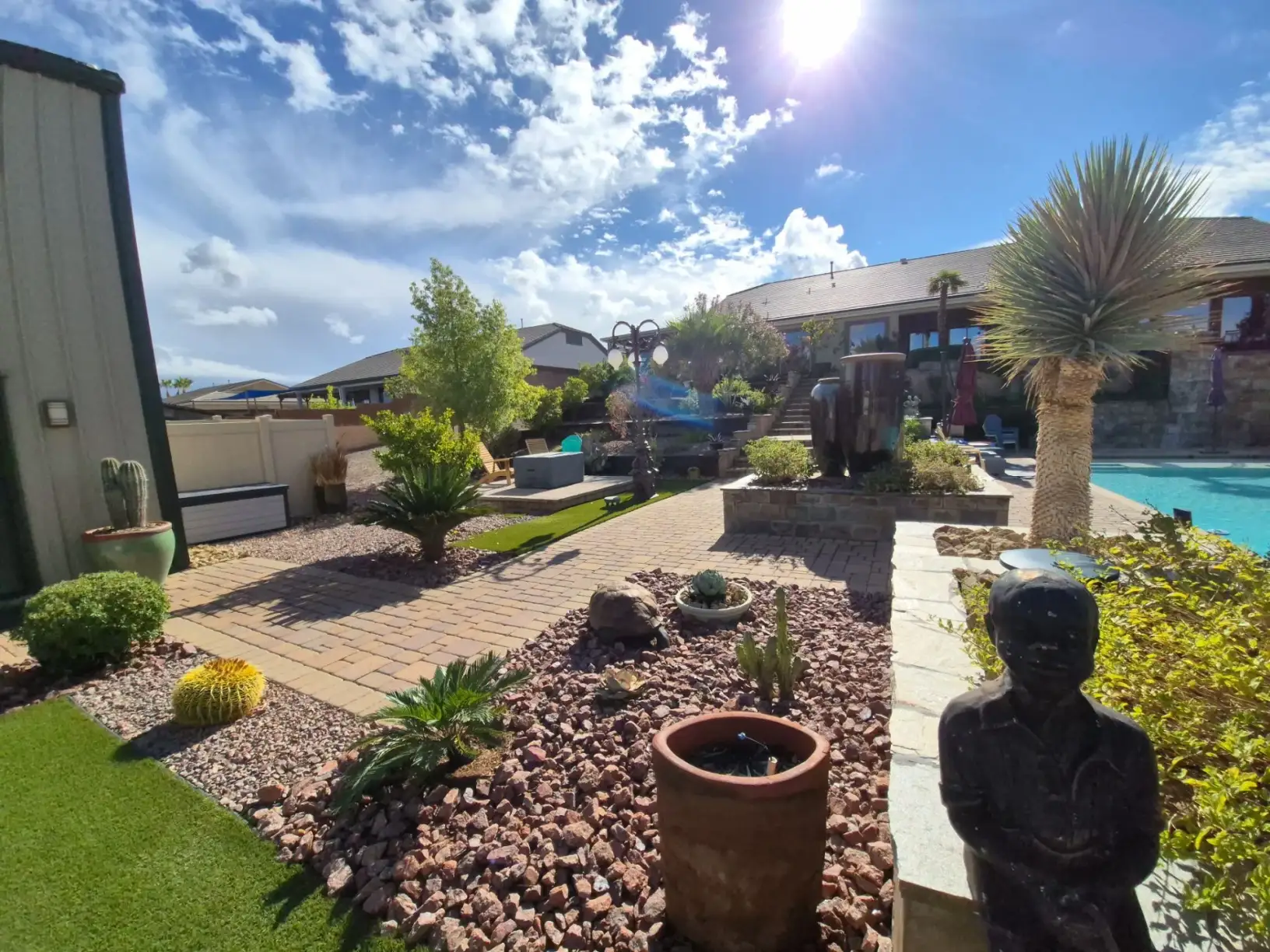
What makes a sustainable desert yard work isn't a single material or plant choice. It's the combination: drought-tolerant species selected for your specific yard's sun exposure and soil, an efficient drip irrigation system that delivers water directly to roots instead of evaporating into 115-degree air, and hardscape elements that reduce the total irrigated footprint. Las Vegas soil is often caliche-heavy, that dense, calcified layer that sits a few inches down and blocks drainage and root growth. We amend for it. Every design we put together accounts for the SNWA's water-wise guidelines, your neighborhood's HOA requirements, and what's genuinely going to look sharp five summers from now. Scope drives cost more than anything else on these projects: a front yard conversion is a different job than a full property redesign. Every job is different, contact Legacy Outdoor Living for an accurate estimate.
Why It Matters
The Desert Doesn't Forgive Conventional Lawns
Las Vegas gets roughly 4 inches of rain per year. A Kentucky bluegrass lawn is simply the wrong plant for this address.
What We Do
Our Sustainable Landscaping Services
Native Plant Selection and Installation
Desert willows, brittlebush, globe mallow, ruellia. The Mojave has more color than most people expect. We select species for your yard's specific microclimate: south-facing exposures handle plants differently than north-facing walls, and a Summerlin yard at elevation sits in different conditions than one in the lower valley. Properly selected native plants need little to no supplemental water once established.
Artificial Turf Installation
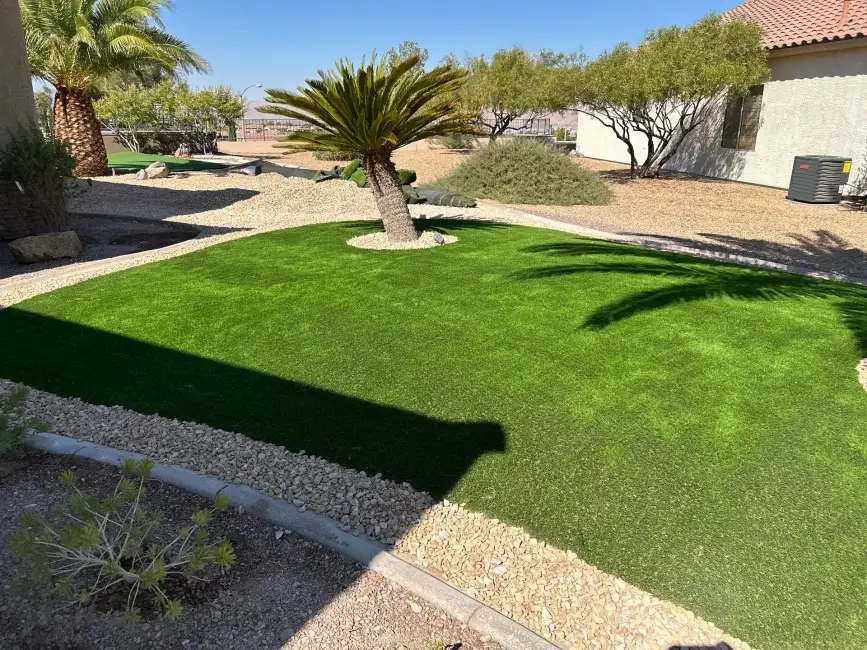
The right turf product matters. Cheap turf bakes hard in desert heat, fades within a few years under UV exposure, and holds odor. We install products rated for the Nevada climate, with proper sub-base preparation and infill. SNWA rebate-qualifying turf replacement is work we know well. We can help you document what you need for the program.
Drip Irrigation Design
Overhead sprinklers lose enormous amounts of water to evaporation in this climate. A properly designed drip irrigation system delivers water at the root zone, on a timer calibrated to seasonal needs, with no overspray onto hardscape or sidewalks. It's the single highest-impact irrigation change most Las Vegas yards can make.
Hardscape Integration
Reducing irrigated lawn area is only half the equation. That space needs to become something, decomposed granite paths, travertine or paver patios, decorative rock borders, or structured garden beds. We handle hardscape and landscape together, which means the design is coherent from the start, not two separate projects bolted together.
Rain Garden and Drainage Design
Las Vegas monsoon season is real, and a yard with no drainage plan becomes a flooding problem fast. A rain garden captures and filters stormwater on-site rather than sending it into the street. Placed correctly, it also provides concentrated moisture to nearby plants, a small design move that pays off every August.
Landscape Renovation
Most sustainable landscaping projects in Las Vegas start with an existing yard that wasn't designed for the desert. We remove what doesn't work, amend the soil, and rebuild with materials and plants that belong here. This is different from a new install. It requires evaluation of what's salvageable, and an honest conversation about what isn't.
Low-Water Plants That Actually Thrive Here
These species are well-suited to Las Vegas Valley conditions, selected for heat tolerance, minimal irrigation needs, and year-round visual interest.
- 01
Desert Willow (Chilopsis linearis)
A fast-growing small tree with orchid-like flowers from spring through fall. Handles reflected heat from walls and pavement. Needs minimal water once established and gives a yard genuine color and structure.
- 02
Brittlebush (Encelia farinosa)
One of the Mojave's most reliable low-water ground covers. Silver-gray foliage that reflects heat, bright yellow flowers in winter and spring, and virtually zero maintenance once it's in the ground.
- 03
Globe Mallow (Sphaeralcea ambigua)
Blooms orange, coral, or pink across a long season. Handles both full sun and reflected heat exceptionally well. A go-to species for HOA-friendly color in Las Vegas front yards.
- 04
Ruellia (Desert Petunia)
Low-growing, dense, and reliable in shaded or partially shaded spots where other desert plants struggle. Purple blooms spring through fall. Pairs well with larger native shrubs as a border or filler.
Our Process
How a Sustainable Yard Comes Together
This is the sequence we follow on every project, no shortcuts, no skipped steps.
- 01
Site Assessment and Design
We evaluate soil condition, sun exposure, drainage patterns, existing irrigation, and HOA guidelines before a single plant goes in the ground. Caliche layers get identified and planned for. The design comes from your yard's actual conditions, not a catalog template.
- 02
Installation and Infrastructure
Soil amendment, drip irrigation lines, hardscape, and plant installation happen in the right sequence. We hold both landscape and hardscape contractor licenses, that matters here because it means one crew, one schedule, and no gap between who's responsible for what.
- 03
Establishment and Handoff
Even drought-tolerant plants need a proper establishment period, typically one full summer of managed irrigation before they're truly on their own. We set your drip system for the establishment schedule and walk you through how to adjust it seasonally so it's not running summer settings in January.
What Homeowners Ask Us About Sustainable Landscaping
How much water can I actually save by switching from grass to native plants or artificial turf?
What's the difference between artificial turf and native plants for a sustainable Las Vegas yard?
Do I need a permit or HOA approval before making sustainable landscaping changes?
How often do sustainable desert landscapes need to be watered and maintained?
What are the best ground cover plants for Las Vegas that don't need much water?
How does caliche soil affect sustainable landscaping in Las Vegas, and how do you fix it?
Do I need a permit or HOA approval before making sustainable landscaping changes in Las Vegas?
How does caliche soil affect sustainable landscaping in Las Vegas, and how do you work around it?
Serving the Las Vegas Valley for 24 Years
We design and install sustainable landscapes across the Las Vegas Valley under NV contractor licenses #0092251 and #0094033. Every crew that shows up is our own, no subcontracting on the core work.
- Las VegasBase
- Henderson
- Summerlin
- North Las Vegas
- Boulder City
- Paradise
- Spring Valley
- Enterprise
- Anthem
- Green Valley
- Southern Highlands
- MacDonald Ranch
- Whitney
- Sunrise Manor
Start Your Sustainable Yard Transformation
24 years in the Las Vegas Valley. Dual contractor licenses. One crew that handles hardscape, landscape, and irrigation together.
Related
Next step
Tell us about the job
Your name, your number and what needs doing. A person from Legacy Outdoor Living gets back to you.
Rather talk now?(702) 508-1226